Skip to content
PEOPLE VOX HR INSIGHTS
Analyze Data 5For the past 15 years, People Vox has been analyzing employee-employer relationships and providing insights into the major trends shaping the world of work.


COMING SOON
Work-life balance
Work-related stress
Trust in the organization’s future
Employees’ intention to stay within the organization
EMPLOYEE EXPERIENCE

Psychosocial Risk Survey: Assess and Prevent Psychosocial Risks

Measure psychosocial risk factors in your organization and identify priorities for action to improve working conditions. The People Vox approach is based on recognized occupational health standards and provides a clear analysis to inform your prevention plan.

  • Identification of psychosocial risk factors by work unit
  • Analysis of organizational causes
  • Prioritization of prevention measures
  • Updating your  Occupational Risk Assessment Document 
pexels-artempodrez-5716042
pexels-fauxels-3184632
pexels-sevenstormphotography-443383
More than 300 organizations like yours benefit from People Vox's research and consulting services
WHY CONDUCT A PSR SURVEY?

Promote Well-Being at Work
by reducing psychosocial risks

A psychosocial risk assessment helps identify work situations that expose employees to stress, fatigue, or tension. It provides a solid foundation for documenting the Occupational Risk Assessment Document, prioritizing actions, and strengthening your prevention efforts.

WHAT WE MEASURE

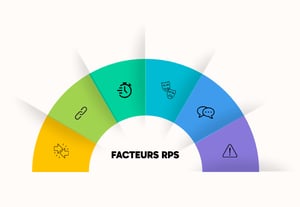
The Main Risk Factors

The study is based on recognized occupational health frameworks (Gollac, INRS, Karasek, COPSOQ), while being tailored to your organization, your job roles, and your internal challenges.

Intensity and Workload

Assess time pressure, workload, interruptions, pace constraints, and the teams’ actual ability to meet their goals.

Emotional Demands

Assess exposure to difficult situations and tensions with the public, customers, service users, or coworkers, as well as the emotional strain associated with the job.

Autonomy and Flexibility

Assess employees’ ability to organize their work, take initiative, and have the necessary resources to perform their duties effectively.
PSR Factors v2

Workplace Relations and Management

Identify the quality of workplace relationships, managerial support, cooperation, recognition, internal tensions, or situations of isolation.

Conflicts of Values

Analyze the discrepancies between prescribed work and actual work, ethical dilemmas, compromised quality, or the feeling of being unable to perform work that meets professional standards.

Job insecurity

Assess concerns related to the future, changes, employment, reorganizations, or the organization’s ability to provide clarity.

Ginger-SB (1)

For the past 10 years, we have been conducting our internal employee survey with People Vox every two years as part of our commitment to continuous improvement. Our employees can respond in complete confidence to share their thoughts on topics that are essential to us. People Vox has always met our expectations, provided guidance, and helped advance this initiative through their expertise […]

The added bonus: the People Vox solution allows us to benchmark ourselves against others.

Logo-groupe-ginger.svg Stéphanie Bailly, HR Director

SUPPORT

Comprehensive and personalized support

From the initial scoping meeting to the presentation of the results, we structure your study and support you at every step to ensure its success.

01 | Defining the Scope of Your Study

Understanding your context, objectives, and target audiences in order to develop a research framework tailored to your specific challenges.

02 | Questionnaire Design

Developing or adapting the questionnaire while ensuring the clarity of the questions, methodological quality, and a positive respondent experience in order to collect reliable and usable data.

03 | Communication

Preparing communication materials for employees, managers, and labor-management partners to foster buy-in and participation.

04 | Preparing for Data Collection

Configuring the survey, filtering rules, distribution lists, access permissions, and anonymization rules to ensure a successful launch.

05 | Data Collection and Field Monitoring

Secure collection of questionnaires, tracking of participation, adjustment of follow-up reminders, and support through the completion of the study.

06 | Data Analysis and Results

Descriptive data analysis, cross-tabulations, and advanced statistical methods to identify trends, significant discrepancies, weak signals, and priorities for action.

07 | Findings & Recommendations

Production of clear and immediately actionable materials. Our mission: to transform raw data into shared insights and drivers for action.

BEYOND TRADITIONAL PSR FACTORS

An in-depth analysis to better identify high-risk situations

The six categories of psychosocial risk factors provide a solid foundation for structuring the assessment. However, certain situations require a more detailed analysis: interpersonal tensions, isolation, internal or external violence, material conditions, safety, and the right to disconnect.

People Vox can enhance the survey with additional modules to better document work situations, identify risks specific to each population, and provide more detailed information for your  Occupational Risk Assessment Document.

TOUCH
Destabilization
Destabilization Identify situations involving poorly managed change, a loss of direction, prolonged uncertainty, or reorganization that teams perceive as destabilizing.
TOUCH
Isolation
Isolation Identify employees or groups facing a lack of support, poor cooperation, a disconnect with management, or a feeling of isolation.
TOUCH
Pressure and Control
Pressure and Control Analyze situations involving excessive monitoring, goals perceived as unattainable, intrusive reporting, etc.
TOUCH
Discrimination
Discrimination Document perceptions of unequal treatment, exclusion, or discriminatory practices.
TOUCH
Violence / Assaults
Violence / Assaults Measure exposure to stress, incivility, threats, or verbal and physical violence, whether they originate internally or externally.
TOUCH
Moral Harassment
Moral Harassment Look for warning signs of repeated behavior such as belittling, humiliation, exclusion, or psychological pressure.
TOUCH
Sexual Harassment
Sexual Harassment Assess whether there are any situations or behaviors with sexual overtones that cause discomfort, undermine dignity, or create a sense of insecurity.
TOUCH
Disconnecting from work
Disconnecting from work Assess employees' actual ability to ensure they get adequate rest, disconnect from digital devices, and maintain sustainable boundaries.
ANALYSIS OF PSRs

A Statistical, Social, and Organizational Analysis of Psychosocial Risks

The value People Vopx brings lies in our ability to transform individual responses into a collective, clear, and actionable assessment. We combine statistical results with a deep understanding of organizations: business lines, operational constraints, management styles, internal transformations, workplace culture, and HR challenges.

FAQ

Frequently Asked Questions

What is an RPS survey? A psychosocial risk survey is a process of listening and analysis designed to identify psychosocial risk factors within an organization. It helps measure employees’ exposure to certain work-related pressures and also helps understand the organizational factors that can contribute to stress, tension, burnout, or a loss of meaning.
What is the purpose of an PRS survey? It is used to objectively assess high-risk situations, identify the most vulnerable populations, and prioritize preventive measures. It can also inform social dialogue, HR action plans, workplace well-being and occupational health and safety initiatives, and updates to the DUERP.
Is an PRS survey required?

Employers have a general obligation to prevent occupational risks, including psychosocial risks. A psychosocial risk assessment is not always mandatory in and of itself, but it provides a structured way to evaluate these risks, document the prevention process, and develop an appropriate action plan.

What is the difference between an PRS survey and a QWL survey? A QVT or QVCT survey generally takes a broader approach to the work experience: engagement, satisfaction, management, cooperation, working conditions, career prospects, etc. An RPS survey is more focused on identifying risk factors that may affect employees’ mental, social, or organizational well-being.
Can we analyze the results by department or work unit? Yes, that is in fact one of the main benefits of this approach. Analyzing data by work unit, site, job category, or population helps us avoid an overly broad interpretation and identify situations that require targeted actions. We do, however, take care to adhere to sufficient statistical thresholds to preserve anonymity.
How can we ensure the confidentiality of the responses? Responses are collected in a secure environment and analyzed in aggregate form. No individually identifiable results are reported. Cross-tabulations are performed only when there are sufficient respondents to ensure their anonymity.
How long does it take to conduct a psychosocial risk survey?

The process takes between 6 and 8 weeks, including questionnaire design, data collection, and reporting of results. It may take longer if individual interviews or focus groups are also included to incorporate a qualitative component.

Can we add questions specific to our context? Yes. The questionnaire can include questions specific to your organization: recent reorganization, workload, interactions with the public, managerial changes, internal conflicts, changes in job roles, remote work, or specific operational constraints.
What scientific tools do you use to analyze psychosocial risks? We use well-established models such as Karasek’s (demand-autonomy balance), Siegriest’s (effort-reward), the COPSOQ, and the JD-R model.
Do you report to my Executive Committee and my Worker Councils? Yes, People Vox participates, as needed, in various decision-making and social dialogue committees to present and discuss the findings of your survey.

Going Onwards With Optimism 1

Assess psychosocial risks objectively to better prevent them


With People Vox, turn your psychosocial risk survey into a clear, actionable assessment that can help you update your Occupational Risk Assessment Document.